

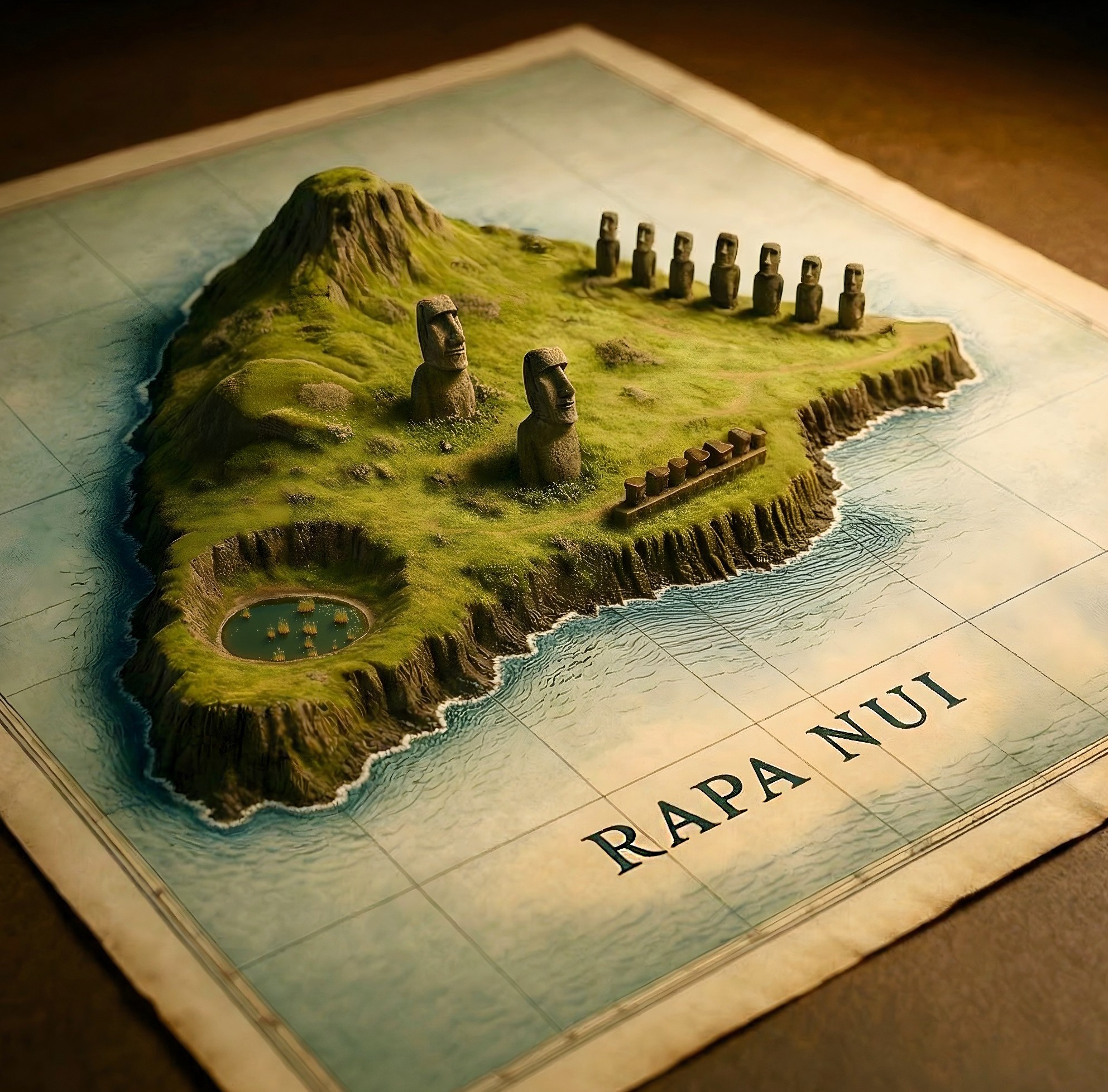
In the heart of the southern Pacific Ocean, in the enigmatic Easter Island -also known as Rapa Nui-, lies a beach that seems to come out of a dream: Anakena. This jewel of the Chilean Polynesia, located in the bay of Haŋa Rau o te Ariki It captivates visitors with its white coral sand, the crystalline blue of its waters and the unmistakable profile of the moais that have watched over it since ancient times.
Anakena is not only the most famous beach on the island, but also the place where, according to Rapa Nui oral tradition, the first ariki landed, Hotu Matu'aThe very name of Anakena contains part of that magic. The very name Anakena contains part of that magic: it comes from the combination of "ana" (cave) and "kena" (the local name for the booby, Sula dactylatra), a seabird that still nests on the island. Thus, Anakena can be translated as "booby cave", evoking the intimate connection between nature and the ancestral life of the island.
Anakena's landscape is unmistakable and deeply evocative: palm trees swaying in the breeze, calm waters ideal for swimming and snorkeling, and two monumental ahu dominating the scene. The Ahu Nau Nauwith its seven moais -some of them still with their red slag headdresses-, is one of the best preserved sites on the island. Nearby, the Ahu Ature Huki, restored in 1956 with the participation of the local community, it was the first moai to be re-erected in modern times and remains a symbol of Rapa Nui resilience and pride.
But Anakena is also a place of archaeological discoveries that have changed the way the world understands the culture of Rapa Nui. In 1978, archaeologist Sonia Haoa and archaeologist Sergio Rapu found in this site a moai eye fragment, carved in white coral and red scoria. This finding was key to demonstrate that the moais originally had embedded eyes, a detail that adds even more mystery and humanity to these monumental sculptures.
Today, Anakena is a living place: it is the meeting point for the local community, who enjoy it as a place of rest and celebration, and for travelers from all over the world who come attracted by its beauty and history. The beach is usually part of full-day tours and is undoubtedly the best place on the island to enjoy the sea, the sand and the magical atmosphere that only Rapa Nui can offer.
For us, Anakena is much more than a name: it is an inspiration and a tribute to the beauty, history and culture of a truly unique place in the world. We chose this name for our brand because we want to convey, through each product, the respect and admiration we feel for this corner of the Pacific, where nature and tradition merge in a harmony that is difficult to find anywhere else on the planet.
Scientific references:
Rapu, S. & Haoa, S. (1978). "The Discovery of the Eye of a Moai". Rapa Nui Journal, 2(2), 1-3.
Martinsson-Wallin, H. (1994). "Ahu - The Ceremonial Stone Structures of Easter Island". Uppsala University.

Photo credits: © Yvan Neault



 Español
  English