

The European Encounter with Rapa Nui
El 5 de abril de 1722, Jakob Roggeveen escribió en el cuaderno de bitácora: «Dimos a la tierra el nombre de Easter Island, porque fue descubierta por nosotros el día de Pascua».
Hace 300 años, el navegante holandés Jacob Roggeveen y su tripulación «descubrieron» esta isla mientras navegaban en busca de la mítica Terra Australis. Al avistarla en Domingo de Pascua, la bautizaron como «Paasch-Eyland», nombre que ha perdurado hasta nuestros días.
The True Discoverers: The Polynesians
Sin embargo, la verdadera historia de descubrimiento comienza muchos siglos antes. La isla ya tenía un nombre: «Te Pito o te Henua», que se traduce como «Ombligo del Mundo». Hoy se conoce como Rapa Nui, nombre que también se da a sus habitantes indígenas y a su lengua ancestral.
According to Rapanui oral tradition and archaeological evidence, the first settlers arrived between the 6th and 10th centuries AD, with the most widely accepted date being sometime during or before the 10th century. Coming from Eastern Polynesia, possibly from the Marquesas Islands (the mythical land of Hiva), these brave navigators embarked on an epic journey across the Pacific Ocean.
La leyenda cuenta que el rey Hotu Matu’a, el «Gran Antepasado», lideró la expedición de colonización. Guiado por el sueño profético de su sabio Haumaka, quien vio una tierra fértil hacia el este, Hotu Matu’a viajó durante seis semanas con aproximadamente 100 personas en dos grandes canoas. Trajeron consigo plantas esenciales como el camote, el taro, el ñame, el plátano y la caña de azúcar, además de gallinas y la rata polinésica.
Anakena: The Cradle of Rapa Nui Civilization
El desembarco ocurrió en Anakena, una hermosa playa de arena blanca en la costa norte de la isla. Este lugar no fue elegido al azar: sus aguas protegidas, su arena coralina y su tierra fértil la convirtieron en el sitio ideal para el primer asentamiento. Anakena, cuyo nombre proviene de «ana» (cueva) y «kena» (piquero, un ave marina), también es conocida como Hanga Rau o te ‘Ariki, la «Bahía de los Reyes».
Tu'u Maheke, Hotu Matu'a's first son, was born here on Rapanui soil, marking the beginning of a new civilization in the heart of the Pacific. It is precisely this paradisiacal and sacred place that inspired the name of our cosmetics brand, Anakena, connecting our products with the purity and ancestral history of this unique land.
The Rise of a Unique Civilization
During its golden age, between 800 and 1680 AD, Rapa Nui society experienced extraordinary development. The population grew and prospered, building approximately 300 ahus (ceremonial platforms) and carving nearly 1,000 moai, the monumental stone statues representing ancestors and their spiritual power or mana.
Recent research challenges the long-standing theory of collapse due to overexploitation of resources. Archaeological studies suggest that the Rapanui were highly resilient, developing ingenious systems such as rock gardens or lithic mulch agriculture to adapt to the island's arid conditions and salty winds. These techniques allowed them to grow nutritious sweet potatoes among the stones, which regulated the temperature and protected the crops.
A Unique Place in the World
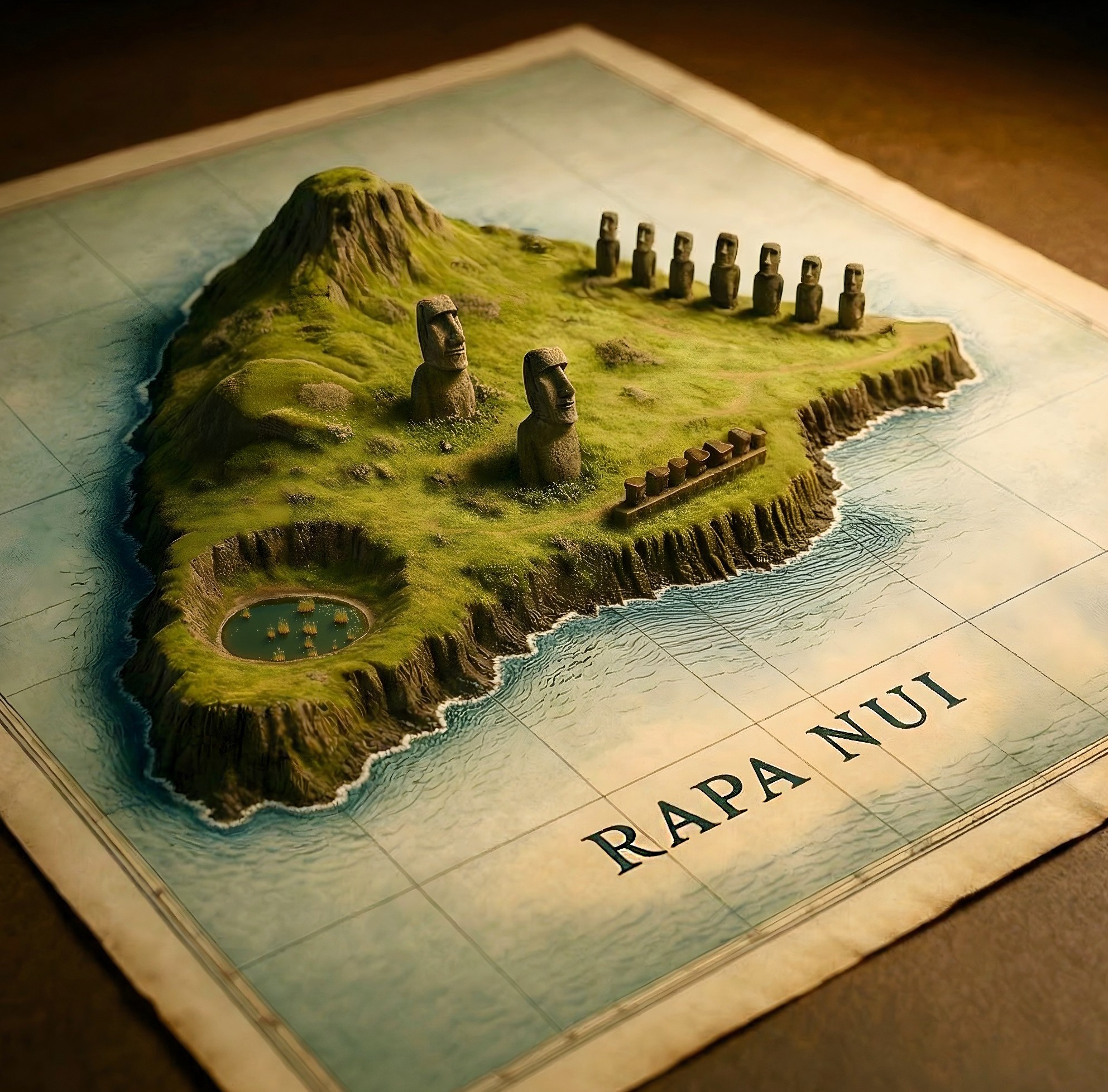
In the foreground of our image, you can see the Rano Kau volcano, whose impressive crater has a diameter of 1.6 kilometers and is one of the three main volcanoes that gave rise to the island.
Rapa Nui measures 163 square kilometers and is probably the most isolated inhabited place on the planet, located 3,800 kilometers off the coast of Chile and at the eastern tip of the Polynesian triangle. This extreme isolation allowed the development of a culture with features unique in the world.
The Legacy of Rapa Nui
The history of Rapa Nui is an extraordinary testament to the human capacity to adapt, create, and thrive in one of the most remote environments on Earth. The Rapanui developed a complex society, a unique writing system (rongorongo), and created monumental architectural works that continue to amaze the world.
Today, the island preserves its rich cultural heritage while keeping its ancestral traditions alive. Every July 7, the Rapanui community commemorates Hotu Matu’a’s arrival in Anakena Bay with ceremonies, songs, and dances, keeping alive the connection to their origins.
Here, in this extraordinary place where ancient history meets the infinite ocean, is where it was born. our cosmetics brand Anakena, inspired by the purity, natural beauty, and resilient spirit of Rapa Nui.



 Español
  English