The European Encounter with Rapa Nui
On April 5, 1722, Jakob Roggeveen wrote in the logbook: «We gave the earth the name of Easter Island, because it was discovered by us on Easter Day».
300 years ago, the Dutch navigator Jacob Roggeveen and his crew «discovered» this island while sailing in search of the mythical Terra Australis. When they sighted it on Easter Sunday, they christened it «Paasch-Eyland», a name that has survived to the present day.
The True Discoverers: The Polynesians
However, the real story of discovery begins many centuries earlier. The island already had a name: «Te Pito o te Henua», which translates as «Navel of the World». Today it is known as Rapa Nui, a name also given to its indigenous inhabitants and their ancestral language.
According to Rapanui oral tradition and archaeological evidence, the first settlers arrived between the 6th and 10th centuries AD, with the most widely accepted date being sometime during or before the 10th century. Coming from Eastern Polynesia, possibly from the Marquesas Islands (the mythical land of Hiva), these brave navigators embarked on an epic journey across the Pacific Ocean.
Legend has it that King Hotu Matu'a, the «Great Ancestor,» led the colonization expedition. Guided by the prophetic dream of his sage Haumaka, who saw a fertile land to the east, Hotu Matu'a traveled for six weeks with approximately 100 people in two large canoes. They brought with them essential plants such as sweet potato, taro, yam, banana and sugar cane, as well as chickens and the Polynesian rat.
Anakena: The Cradle of Rapa Nui Civilization
The landing occurred at Anakena, a beautiful white sand beach on the north coast of the island. This place was not chosen at random: its protected waters, coral sand and fertile soil made it the ideal site for the first settlement. Anakena, whose name comes from «ana» (cave) and «kena» (booby, a seabird), is also known as Hanga Rau or te ‘Ariki, the «Bay of Kings».
Tu'u Maheke, Hotu Matu'a's first son, was born here on Rapanui soil, marking the beginning of a new civilization in the heart of the Pacific. It is precisely this paradisiacal and sacred place that inspired the name of our cosmetics brand, Anakena, connecting our products with the purity and ancestral history of this unique land.
The Rise of a Unique Civilization
During its golden age, between 800 and 1680 AD, Rapa Nui society experienced extraordinary development. The population grew and prospered, building approximately 300 ahus (ceremonial platforms) and carving nearly 1,000 moai, the monumental stone statues representing ancestors and their spiritual power or mana.
Recent research challenges the long-standing theory of collapse due to overexploitation of resources. Archaeological studies suggest that the Rapanui were highly resilient, developing ingenious systems such as rock gardens or lithic mulch agriculture to adapt to the island's arid conditions and salty winds. These techniques allowed them to grow nutritious sweet potatoes among the stones, which regulated the temperature and protected the crops.
A Unique Place in the World
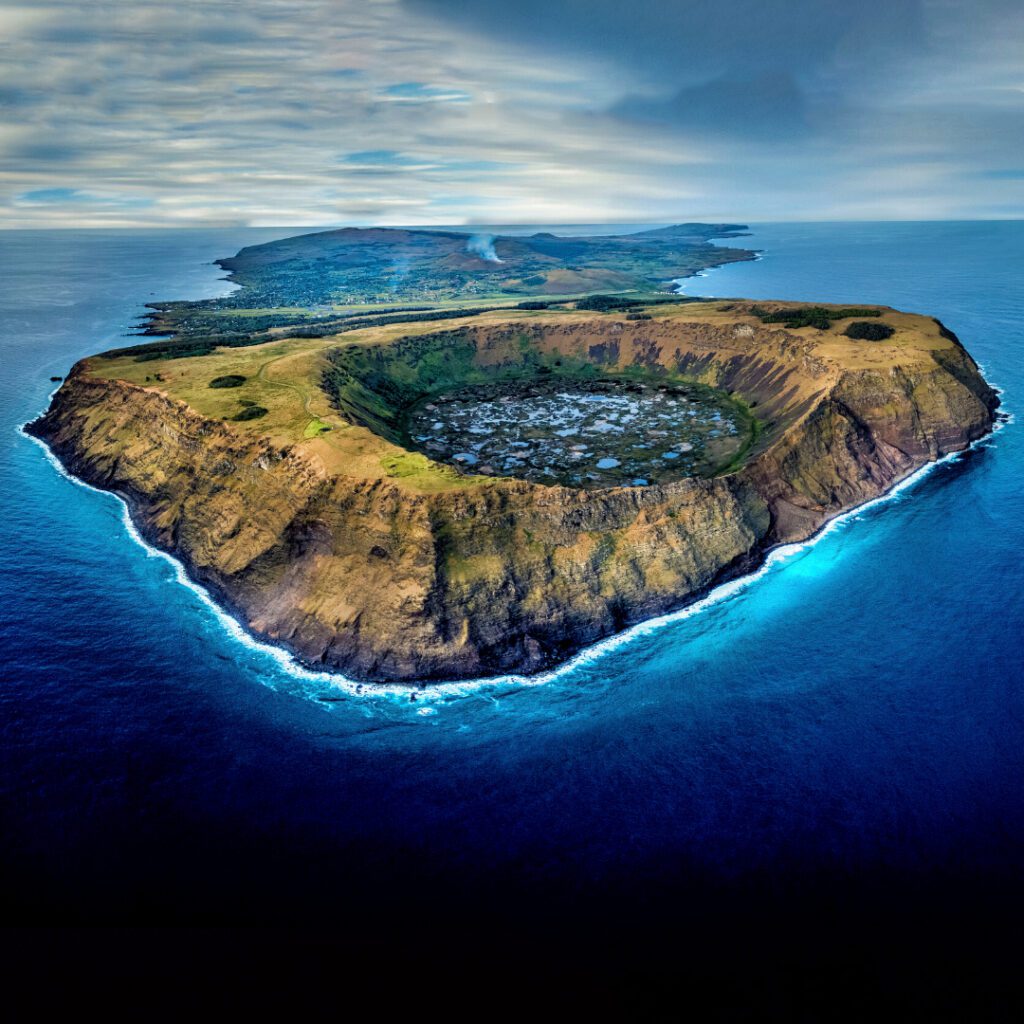
In the foreground of our image, you can see the Rano Kau volcano, whose impressive crater has a diameter of 1.6 kilometers and is one of the three main volcanoes that gave rise to the island.
Rapa Nui measures 163 square kilometers and is probably the most isolated inhabited place on the planet, located 3,800 kilometers off the coast of Chile and at the eastern tip of the Polynesian triangle. This extreme isolation allowed the development of a culture with features unique in the world.
The Legacy of Rapa Nui
The history of Rapa Nui is an extraordinary testament to the human capacity to adapt, create, and thrive in one of the most remote environments on Earth. The Rapanui developed a complex society, a unique writing system (rongorongo), and created monumental architectural works that continue to amaze the world.
Today, the island preserves its rich cultural heritage while keeping its ancestral traditions alive. Every July 7, the Rapanui community commemorates Hotu Matu’a’s arrival in Anakena Bay with ceremonies, songs, and dances, keeping alive the connection to their origins.
Here, in this extraordinary place where ancient history meets the infinite ocean, is where it was born. our cosmetics brand Anakena, inspired by the purity, natural beauty, and resilient spirit of Rapa Nui.